How Does Your Garden Grow?
/
Is it Spring yet? Getting Your Garden Ready for the New Season.
by Stacy Bernard Davis, Master Gardener
After the icy, frigid winter we’ve had in Burleith, I’m ready to look for signs of spring and warming temperatures. Experts recommend waiting until the mercury is consistently above 50 degrees Fahrenheit to start spring cleaning your garden, as bees and other pollinators may be hibernating in plant material over the winter.
What to do first? Start planning. What kinds of plants do you want to grow – annuals, perennials, vegetables, herbs? Order seeds if you want to start sowing indoors before transplanting outside. If you want to have fun with your children, it’s as easy as saving an egg carton, putting some soil in it, then planting seeds, being sure they get sufficient light and water. Each egg cup section is easily transplanted straight into your garden once it is warm enough. Some early spring vegetables do well in cooler temperatures, such as broccoli, cabbage, and leafy greens. Cabbage seems to be the trendy vegetable in 2026, judging from articles ranging from Vogue magazine to newspapers to social media crowing about its affordability and nutritional benefits. It’s not too early to start growing other vegetables from seed indoors, like tomatoes. According to the Old Farmer’s Almanac, March 30 is the date of the last frost. If you’ve had seeds hanging around from past years, test them to see if they’ll germinate or check their expiration dates and discard if they’re past their prime. Do you want to grow flowers and attract pollinators? Perhaps you have a certain color scheme you like. Visit local nurseries and ask the experts there, or find online resources that are geared to plants in the USDA Plant Hardiness Zone 7. The United States Botanic Garden has recommendations for native plants that range from attracting pollinators to wildflowers to shrubs and trees: https://www.usbg.gov/native-plant-recommendations#critters.
As the weather improves, work on your soil. Clear the debris from our intense winter “snowcrete.” Replace mulch. Pull up dead annuals. Remove dead growth from perennials. Early warming will encourage weeds to sprout after lying dormant during the winter. Be aggressive in pulling them up before they get established and spread. For the urban farmers among us, get your soil tested for nutrients. The University of the District of Columbia offers soil testing: https://www.udc.edu/causes/eqtl/. Knowing what’s in your yard will enable you to amend the soil appropriately for ideal growing conditions. If you plan to grow vines or vegetables next to a fence line, make sure the fence or other supports are solid after the winter.
Do you have fruit or ornamental trees and shrubs? Prune them while they’re dormant. Advice on pruning can be found on websites for university Extension programs (the University of Maryland is a good source), the U.S. Forest Service, and online videos.
You may have a bird feeder, bird bath, or bird houses in your yards. Continue feeding the birds (shout out to our neighbor who shared her excess bird seed with us earlier this winter). Make sure the water in the bird bath is clean. Clear out the bird houses so new birds can nest.
Composting is always helpful for the home gardener. I discussed it in the December Bell (https://www.burleith.org/burleith-bell), and if you’d like to get on the wait list for city composting, here’s the link: https://zerowaste.dc.gov/curbsidecomposting.
For those of you reluctant to put a lot of effort into your garden, I encourage you to look at low-maintenance native plants and perennial ground covers (Green and Gold is a good one, as is Moss Phlox – many neighbors have them in their yards) instead of opting for artificial grass. While fake grass may remain bright green for a few years, it’s very bad for the environment. Some of the reasons astroturf is detrimental to the natural world are discussed in this post I found online: https://www.jackwallington.com/17-reasons-to-avoid-fake-lawns-how-bad-is-artificial-grass-for-the-environment/. Given the challenges of global warming we face as a society, and seeing how many of our neighbors are composting through Compost DC, this is a gentle request to rethink an inclination to cover your yard with artificial grass and instead explore native plants and low-growing perennials that are equally low-maintenance.
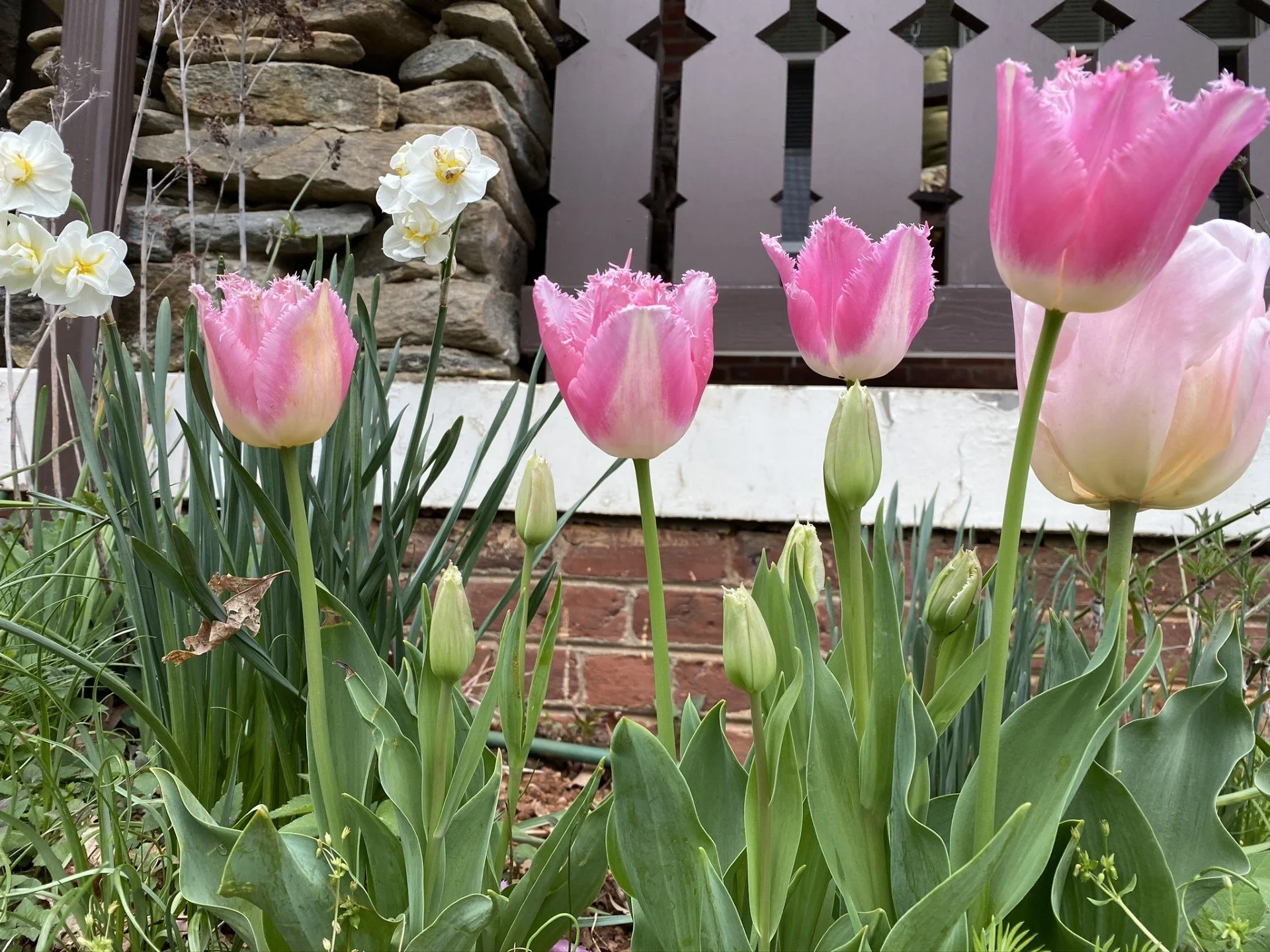
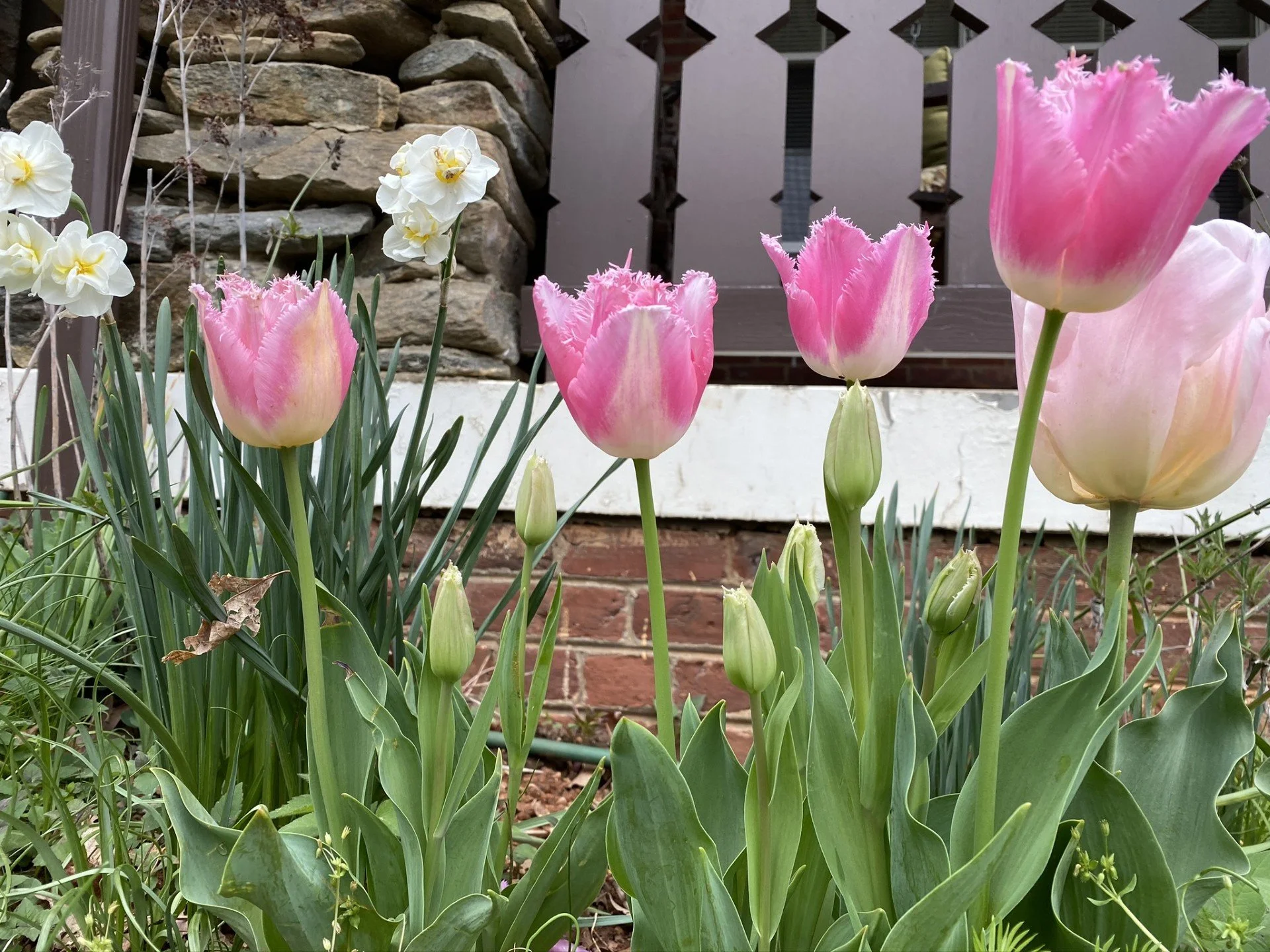
As we all breathe a sigh of relief that the worst of the winter is past, I look forward to seeing color emerge in Burleith and getting my hands dirty in my garden. I’m happy to talk to you about garden projects, and will post excess perennials to share on the listserv (Black-eyed Susans proliferate in my yard). Here’s to the spring season!